Concrete concrete slabs are the foundation of modern construction — from residential driveways to industrial floors, they offer unmatched strength, durability, and versatility. These slabs serve as the base for countless structures, ensuring long-lasting stability and resistance against environmental wear.
Whether you’re building a new home, commercial building, or patio, understanding the science behind concrete concrete slabs helps you make informed decisions about cost, material, and performance. In this guide, we’ll explore everything — from slab types and installation to maintenance and cost estimation — so you can build confidently.
1. What Are Concrete Concrete Slabs?
A concrete concrete slab is a flat, horizontal structural element made by pouring a mixture of cement, sand, aggregate, and water into a form. Once it cures, it forms a strong base for flooring, foundations, and structural frameworks.
These slabs are popular because they’re cost-effective, long-lasting, and can handle heavy loads. They’re used in everything from houses and garages to highways and skyscrapers.
2. Types of Concrete Concrete Slabs
Different projects require different slab designs. Here are the main types:
a. Ground-Bearing Slabs
Placed directly on the soil, these are common in residential foundations and driveways. They rely on soil strength for support.
b. Suspended Slabs
Used in multi-story buildings, these slabs are supported by beams or columns.
c. Precast Slabs
Manufactured off-site and installed on-site, offering quick setup and consistent quality.
d. Post-Tensioned Slabs
Reinforced with tensioned steel cables to resist cracking and handle heavier loads.
e. Hollow-Core Slabs
Lightweight slabs are often used in commercial or high-rise buildings for reduced material use.
f. Fiber-Reinforced Slabs
Include synthetic or steel fibers to improve crack resistance and durability.
Comparison Table (Simplified)
| Type | Durability | Best Use | Cost (per sq. ft.) |
|---|---|---|---|
| Ground-bearing | High | Residential floors | $4–$6 |
| Suspended | Very high | Multi-story | $6–$10 |
| Precast | High | Quick installs | $5–$9 |
| Post-tensioned | Very high | Industrial | $8–$12 |
3. Common Uses of Concrete Concrete Slabs
Concrete concrete slabs are versatile and suitable for:
-
Driveways and garage floors
-
Patios and walkways
-
Commercial and industrial floors
-
Residential foundations
-
Basements and pavements
Their strength and flexibility make them the go-to option for structural foundations worldwide.
4. Installation Process: Step-by-Step
Proper installation ensures your concrete concrete slabs last for decades. Follow this standard process:
-
Site Preparation: Clear debris and level the ground.
-
Excavation: Dig to the required depth.
-
Base Layer: Add a compacted gravel or sand base.
-
Formwork: Set wooden or metal frames to shape the slab.
-
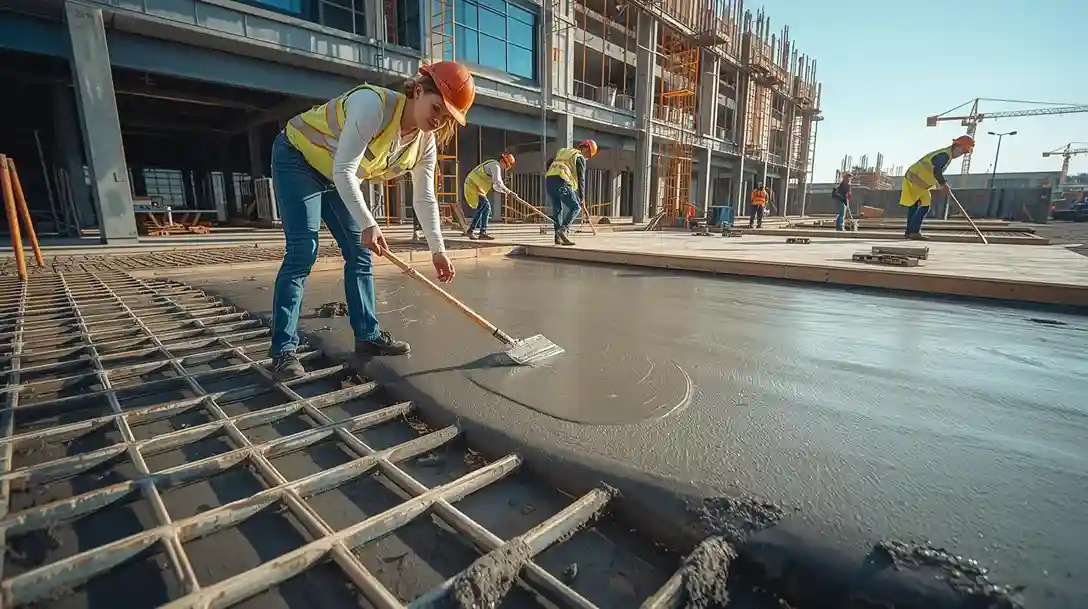
Reinforcement: Add rebar or mesh for strength.
-
Mixing and Pouring: Pour concrete evenly and compact to remove air pockets.
-
Leveling: Use a screed to smooth the surface.
-
Curing: Keep the slab moist for 7–14 days to prevent cracking.
-
Finishing: Apply a trowel finish or sealant for protection.
5. Thickness and Reinforcement Guide
The thickness of your concrete concrete slabs depends on usage:
| Application | Recommended Thickness | Reinforcement |
|---|---|---|
| Patios/Sidewalks | 4 inches | Mesh or light rebar |
| Driveways | 5–6 inches | #3 rebar |
| Garage floors | 6 inches | Heavy mesh |
| Industrial floors | 8 inches+ | #4 or #5 rebar grid |
Proper reinforcement prevents structural failure and increases load capacity.
6. Cost Estimation (Per Square Foot)
The cost of concrete concrete slabs varies depending on thickness, region, and reinforcement. Here’s an estimate:
| Type | Average Cost per Sq. Ft. |
|---|---|
| Basic residential slab | $4–$6 |
| Reinforced commercial slab | $6–$9 |
| Decorative finish slab | $8–$12 |
| Industrial-grade slab | $10–$15 |
You can calculate your exact material requirement using the following internal calculators:
7. Advantages of Concrete Concrete Slabs
Concrete concrete slabs offer several key benefits:
-
Durability: They last over 50 years with minimal maintenance.
-
Fire Resistance: Concrete resists fire, enhancing building safety.
-
Low Maintenance: Only occasional sealing or cleaning required.
-
Thermal Efficiency: Reduces heat transfer, helping with insulation.
-
Load-Bearing Strength: Suitable for both light and heavy structures.
-
Cost-Effective: Low installation and lifetime costs compared to alternatives.
8. Common Mistakes During Installation
Even small mistakes can shorten the lifespan of concrete concrete slabs. Avoid these issues:
-
Poor compaction of soil or sub-base.
-
Skipping reinforcement in large slabs.
-
Improper curing (too dry or too fast).
-
Using too much water in the mix.
-
Ignoring expansion joints.
These problems can cause cracks, uneven settling, or weak structural integrity.
9. Maintenance Tips for Longevity
Follow these expert tips to extend the life of your concrete concrete slabs:
-
Seal every 2–3 years to protect against moisture and chemicals.
-
Clean spills promptly to prevent staining.
-
Repair cracks early with patching compounds.
-
Avoid de-icing salts in winter to reduce surface damage.
-
Ensure drainage to prevent water accumulation.
Regular care ensures your slab retains both strength and visual appeal.
10. Concrete Concrete Slabs vs. Other Foundations
| Feature | Concrete Concrete Slabs | Crawl Space | Basement |
|---|---|---|---|
| Cost | Low | Medium | High |
| Strength | High | Medium | Very high |
| Maintenance | Low | Medium | High |
| Energy Efficiency | Excellent | Average | Poor |
| Lifespan | 50+ years | 30–40 years | 50+ years |
Concrete concrete slabs remain the preferred choice for modern homes and commercial spaces due to their simplicity and reliability.
11. Frequently Asked Questions (FAQ)
1. What is the best mix ratio for concrete concrete slabs?
A standard mix is 1 part cement, 2 parts sand, and 3 parts aggregate with enough water for workable consistency.
2. How thick should a concrete concrete slab be?
Most residential slabs are 4–6 inches thick, while industrial slabs can exceed 8 inches.
3. How much does a 10×10 concrete concrete slab cost?
On average, expect $600–$1,000 depending on thickness, material, and finish.
4. What’s the curing time for concrete concrete slabs?
Concrete reaches full strength in about 28 days, though it can be walked on after 48 hours.
5. How to prevent cracks in concrete concrete slabs?
Ensure proper curing, add expansion joints, and use reinforcement like rebar or mesh.
6. Can concrete concrete slabs be repaired?
Yes, minor cracks can be patched, while larger damages may require resurfacing or replacement.
12. Conclusion
Concrete concrete slabs are the foundation of durable and efficient construction. Whether you’re a homeowner building a patio or a contractor managing large-scale infrastructure, choosing the right slab type and following correct installation practices ensures a lifetime of stability and safety.
Before starting your next project, calculate your material needs using:
For more expert information, visit the Portland Cement Association and Concrete Network.
Build smart, plan right, and trust the strength of concrete concrete slabs — your foundation for decades of performance.