When planning a construction, landscaping, or DIY project, one of the most important steps is accurately calculating the amount of sand you’ll need. Ordering too little sand can halt your progress, while ordering too much leads to wasted money and resources. That’s why using a dedicated Sand Quantity Calculator is essential for anyone who wants to save time, reduce costs, and complete their project successfully.
Sand Quantity Calculator Matters
Why Accurate Sand Estimation Matters
Sand is a critical material for many projects—whether you’re laying pavers, building patios, filling playgrounds, or mixing concrete. Precise estimation ensures:
- Cost savings by preventing over- or under-ordering
- Efficient project management
- Reduced environmental impact by minimizing waste
Related Resource:
If you also need to estimate other materials, try our Asphalt Calculator and Cubic Yard Calculator for more options.
What Is a Sand Quantity Calculator?
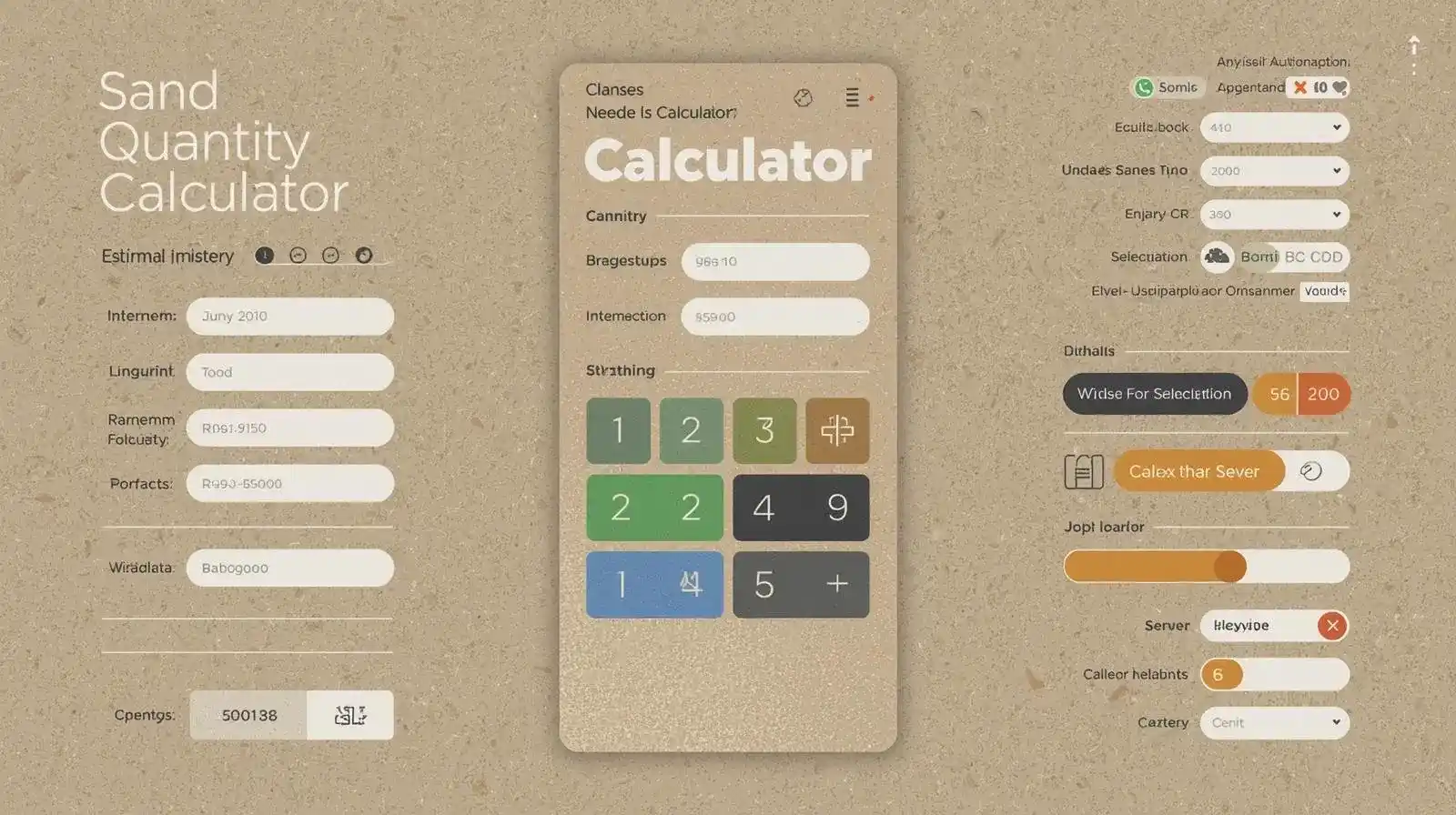
A Sand Quantity Calculator is an online tool designed to instantly estimate how much sand is required for a specific project area. By entering your project’s dimensions—length, width, and depth—the calculator provides you with the exact amount of sand needed, typically in cubic yards, tons, or kilograms.
Key Features of Our Sand Calculator:
- User-friendly interface
- Supports multiple units (feet, meters, inches, centimeters)
- Works for various shapes (rectangular, circular, irregular)
- Quick, accurate results
Ready to get started? Use our Sand Quantity Calculator now for instant, precise estimates.
How to Use the Sand Quantity Calculator
Here’s a simple step-by-step guide to using our sand calculator:
- Measure Your Project Area:
Use a tape measure to record the length, width, and desired sand depth. For circular areas, measure the diameter. - Enter Your Dimensions:
Visit our Sand Quantity Calculator and input your measurements. You can select your preferred units. - Select Sand Type (If Needed):
Some projects require specific sand types, such as sharp sand for paving or play sand for sandboxes. If your project has unique requirements, consider the density and type. - Get Your Estimate:
The calculator will instantly display the total sand needed for your project. - Order Sand:
Use your results to order the correct amount from a local supplier.
Pro Tip:
Always round up your estimate slightly to account for compaction, spillage, or measurement errors.
Example Calculation
Suppose you’re installing a rectangular patio measuring 12 feet long, 8 feet wide, with a sand layer 2 inches deep.
- Area: 12 ft × 8 ft = 96 sq ft
- Depth in feet: 2 inches ÷ 12 = 0.1667 ft
- Volume: 96 sq ft × 0.1667 ft = 16 cubic feet
- Convert to cubic yards: 16 ÷ 27 = 0.59 cubic yards
You would need approximately 0.6 cubic yards of sand for this project.
For more conversions, check our Cubic Yard Calculator.
Common Uses for Sand Quantity Calculators
- Patio and Walkway Installation:
Ensures a stable base for pavers or tiles. - Playgrounds and Sandboxes:
Provides safe and adequate coverage for children. - Gardening and Landscaping:
Used for leveling, improving drainage, or creating decorative features. - Construction Projects:
Ideal for mixing concrete, creating mortar, or filling trenches.
Factors Affecting Sand Quantity Estimates
Several factors can impact how much sand you need:
1. Sand Compaction
After placement, sand settles and compacts, reducing its volume. Add 5–10% extra to your estimate for best results.
2. Sand Type & Density
Different sand types have different densities. Sharp sand packs tighter than play sand. Always check supplier specifications for density.
3. Project Shape
Irregular shapes require more complex calculations. Break the area into smaller sections or use calculators that support multiple shapes.
4. Site Conditions
Sloped or uneven sites may require more sand to achieve a level finish.
Benefits of Using Our Sand Quantity Calculator
- Saves Time:
Instant calculations mean less time spent on manual math. - Improves Accuracy:
Reduces errors and ensures you order the right amount. - Budget-Friendly:
Prevents unnecessary spending. - Eco-Friendly:
Minimizes waste and environmental impact.
How to Choose the Right Sand for Your Project
Not all sand is the same. Here are common types and their uses:
- Sharp Sand: Best for paving and concrete.
- Play Sand: Safe for children’s sandboxes.
- Builder’s Sand: General-purpose construction.
- Masonry Sand: Used in mortar for brickwork.
External Resource:
Learn more about sand types at The Spruce: Types of Sand Used in Construction.
Where to Buy Sand
Sand is available at local hardware stores, garden centers, and building suppliers. Many offer delivery, which is convenient for large quantities.
Internal Resource:
Estimate delivery costs and project budgets with our Asphalt Driveway Cost Calculator.
Step-by-Step Guide to Ordering Sand
- Calculate Quantity:
Use our Sand Quantity Calculator for your estimate. - Contact Supplier:
Provide your estimate and discuss sand types. - Confirm Delivery:
Schedule delivery based on your project timeline. - Prepare Site:
Ensure your area is accessible for delivery and placement.
FAQs: Sand Quantity Calculator
Q1: How accurate is your sand quantity calculator?
A: Our calculator provides highly accurate estimates when correct measurements and sand density are entered. Always add a small margin for compaction and error.
Q2: What units can I use in the calculator?
A: You can enter measurements in feet, meters, inches, centimeters, cubic yards, and tons.
Q3: Can I use the calculator for irregular shapes?
A: Yes. Break the area into smaller sections, calculate each, and add the totals together.
Q4: How do I convert cubic feet to cubic yards?
A: Divide cubic feet by 27 to get cubic yards.
Q5: Where can I find a reliable sand quantity calculator online?
A: You can use our own Sand Quantity Calculator for instant, accurate results, or visit reputable tools like Calculator.net Sand Calculator.
Q6: Can I use sand calculators for other materials?
A: Yes. We also offer a Gravel Calculator and Asphalt Calculator for other materials.
Internal Links for User Helpfulness
- Sand Quantity Calculator
- Asphalt Calculator
- Cubic Yard Calculator
- Gravel Calculator
- Asphalt Driveway Cost Calculator
External Links for Authority
Final Tips for Successful Sand Estimation
- Double-check your measurements before ordering.
- Consider site-specific needs like drainage and compaction.
- Consult with suppliers about sand types and delivery options.
- Use multiple calculators for cross-verification if needed.
Conclusion
A sand quantity calculator is an essential tool for anyone planning a construction, landscaping, or DIY project. By using our calculator, you save money, improve project efficiency, and ensure a successful outcome. For more helpful calculators and guides, explore our website or reach out for expert advice.
Ready to start your project? Use our Sand Quantity Calculator now for quick and precise results.
Meta Description